
Central GST
CA. Rajiv Luthia, CA. Jinit Shah
-
CBIC Vide CIRCULAR NO. 207/1/2024-GST DATED 26TH JUNE, 2024 has fixed the following monetary limit below which appeal or application or SLP, as the case may be shall not be filed by Central tax officer before GSTAT, HIGH COURTS AND SUPREME COURT:
-
Where any provision of the CGST Act or SGST/UTGST Act or IGST Act or GST (Compensation to States) Act has been held to be ultra vires to the Constitution of India; or
-
Where any Rules or regulations made under CGST Act or SGST/UTGST Act or IGST Act or GST (Compensation to States) Act have been held to be ultra vires the parent Act; or
-
Where any order, notification, instruction, or circular issued by the Government or the Board has been held to be ultra vires of the CGST Act or SGST/UTGST Act or IGST Act or GST (Compensation to States) Actor the Rules made there under; or
-
Where the matter is related to -
-
Valuation of goods or services; or
-
Classification of goods or services; or
-
Refunds; or
-
Place of Supply; or
-
Any other issue,
which is recurring in nature and/or involves interpretation of the provisions of the Act /the Rules/ notification/circular/order/instruction etc.
-
Where strictures/adverse comments have been passed and/or cost has been imposed against the Government/Department or their officers; or
-
Any other case or class of cases, where in the opinion of the Board, it is necessary to contest in the interest of justice or revenue.
Further, other than aforesaid clarifications, the circular also clarifies on the principles to be considered while determining whether a case falls within the above monetary limits or not.
-
CBIC Vide CIRCULAR NO. 208/2/2024-GST DATED 26TH JUNE,2024 has issued various clarifications in respect of issues pertaining to special procedure for the manufacturers of the specified commodities as per Notification No. 04/2024 - Central Tax dated 05.01.2024
-
CBIC vide CIRCULAR NO. 209/3/2024-GST DATED 26TH JUNE,2024 has issued following clarification in respect of provisions of Section 10(1) (ca) of the IGST Act, 2017 relating to place of supply of goods to unregistered persons
-
Clause (ca) was inserted w.e.f. 1st October, 2023 as a non-obstante provision overriding the provisions u/s10(1)(a) or 10 (1) (c) of IGST Act.
-
The clause (ca) provides that where the supply of goods is made to an unregistered person, the place of supply would be the location as per the address of the said person recorded in the invoice and where the address of the said person is not recorded in the invoice, the place of supply shall be the location of the supplier.
-
It is further clarified by inserting an explanation that recording the name of the State of said unregistered person shall be deemed to be the recording of address of said person.
-
CBIC has clarified following issue in respect of Section 10(1) (ca)
Place of supply of goods (particularly being supplied through e-commerce platform) to unregistered persons where billing address is different from the address of delivery of goods.
1.
Mr. A (unregistered person) located in X State places an order on an e-commerce platform for supply of a mobile phone, which is to be delivered at an address located in Y State. Mr. A, while placing the order on the e-commerce platform, provides the billing address located in X state. In such a scenario, what would be the place of supply of the said supply of mobile phone, whether the State pertaining to the billing address i.e. State X or the State pertaining to the delivery address i.e. State Y?
Accordingly, it is clarified that in such cases involving supply of goods to an unregistered person, where the address of delivery of goods recorded on the invoice is different from the billing address of the said unregistered person on the invoice, the place of supply of goods in accordance with the provisions of clause (ca) of sub-section (1) of section 10 of IGST Act, shall be the address of delivery of goods recorded on the invoice i.e. State Y in the present case where the delivery address is located.
Also, in such cases involving supply of goods to an unregistered person, where the billing address and delivery address are different, the supplier may record the delivery address as the address of the recipient on the invoice for the purpose of determination of place of supply of the said supply of goods.
-
-
CBIC Vide CIRCULAR NO. 210/4/2024- GST DATED 26TH JUNE,2024 has issued following clarification in respect of valuation of supply of import of services by a related person where recipient is eligible to full Input Tax Credit
-
As per S. No. 4 of Schedule I of the CGST Act, import of services by a person from a related person or from any of his other establishments outside India, in the course or furtherance of business, is to be treated as supply even if made without consideration and the GST thereon is liable to be discharged by a registered person in India under reverse charge mechanism and the registered person in India is required to issue self-invoice under Section 31(3)(f) of CGST Act .
-
Vide Circular No. 199/11/2023-GST dated 17.07.2023, it was clarified by CBIC that value declared in invoice (including ZERO) in cases of supply of services by DISTINCT PERSON and full ITC thereof is available to the recipient, then the value adopted shall be deemed to be open market value.
-
It is clarified that in cases where the foreign affiliate is providing certain services to the related domestic entity, and where full ITC is available to the said related domestic entity, the value of such supply of services declared in the invoice by the said related domestic entity may be deemed as open market value in terms of second proviso to Rule 28(1) of CGST Rules.
-
Further, in cases where full ITC is available to the recipient, if the invoice is not issued by the related domestic entity with respect to any service provided by the foreign affiliate to it, the value of such services may be deemed to be declared as Nil, and may be deemed as open market value in terms of second proviso to Rule 28(1) of CGST Rules.
-
CBIC vide CBIC CIRCULAR VIDE NO. 211/5/2024-GST DATED 26TH JUNE,2024 has issued following clarification on time limit u/s 16(4) of CGST ACT, 2017 in respect of RCM supplies received from unregistered persons
-
Section 16(4) provides for time limit of availment of ITC till due date of filling GST return for September following end of financial year/ 30th November from end of financial year or date of filling annual return whichever is earlier.
-
It is now clarified that in cases of supplies received from unregistered suppliers, where tax has to be paid by the recipient under RCM and where invoice is to be issued by the recipient of the supplies in accordance with section 31 (3) (f) of CGST Act, the relevant financial year for calculation of time limit for availment of ITC as per section 16 (4) of CGST Act will be the financial year in which the invoice has been issued by the recipient u/s 31 (3) (f) of CGST Act, subject to payment of tax on the said supply by the recipient and fulfilment of other conditions and restrictions of section 16 and 17 of CGST Act.
-
In case, the recipient issues the invoice after the time of supply of the said supply and pays tax accordingly, he will be required to pay interest on such delayed payment of tax. Further, in cases of such delayed issuance of invoice by the recipient, he may also be liable to penal action under the provisions of Section 122 of CGST Act.
-
CBIC vide Circular No. 212/6/2024-GST dated 26th June, 2024 has issued clarification for treatment of post-sale discounts by the issuance of credit note:
-
Section 15(3)(b)(ii) of the CGST Act, 2017 states that that wherever any post sale discount is offered by the supplier by issuance of a tax credit note, the said discount can be excluded from the value of taxable supply only if the recipient has reversed the input tax credit attributable to the said discount.
-
Presently, there is no facility available to the supplier as well as the tax officers to verify the reversal of input tax credit attributable to the said discount.
-
The CBIC has issued the said circular to clarify the issue and to ensure uniformity in implementation of the provisions of law with respect to the verification of such reversal of input tax credit, attributable to such discounts offered through tax credit notes.
-
It has been clarified that the supplier has to obtain a certificate as under:
-
The supplier may procure and provide such certificates issued by CA/CMA or the undertakings/certificates issued by the recipients of supply, as the case may be, to the concerned investigating/audit/ adjudicating authority as evidence of requisite reversal of input tax credit by his recipients.
- CBIC vide Circular No. 213/7/2024-GST dated 26th June, 2024 has issued Clarification on the taxability of Employee Stock Option (ESOP)/Employee Stock Purchase Plan (ESPP)/ Restricted Stock Unit (RSU) provided by a company to its employees through its overseas holding company:
-
As per the said circular:
Transaction between Foreign Holding Company and Domestic Subsidiary Company
The Foreign holding company allots its share to the employees of the Domestic subsidiary company, where the Domestic subsidiary company reimburses the cost of such securities/shares to the foreign holding company on cost-to-cost basis.
Such reimbursement by Domestic subsidiary company to foreign holding company is for transfer of securities/ shares, which is neither in nature of goods nor services.
Thus, the same cannot be considered as import of services and not leviable to GST.
The Foreign holding company allots its share to the employees of the Domestic subsidiary company, where the foreign holding company charges any additional fee, mark-up, or commission from the domestic subsidiary company for issuing ESOP/ESPP/ RSU to the employees of the Domestic subsidiary company (Not on cost-to-cost basis).
The said transaction shall be considered to be in nature of consideration for the supply of services of facilitating/ arranging the transaction in securities/ shares by the foreign holding company to the Domestic subsidiary company.
Thus, GST shall be payable by the Domestic subsidiary company on such additional amount charged as consideration under reverse charge mechanism.
Transaction between Domestic Subsidiary Company and its Employees
Transfer of Securities/Shares of the Foreign holding company by the Domestic subsidiary company to its employee by the way of ESOP/ESPP/RSU.
Such transfer of shares by way of ESOP/ESPP/RSU is neither a supply of goods nor as supply of services as per Schedule III of the CGST Act, as it is considered as “Services by an employee to the employer in the course of or in relation to his employment”.
Therefore, no GST is payable on the said transaction.
-
CBIC vide Circular No. 214/8/2024-GST dated 26th June, 2024
issued clarification on the requirement of ITC reversal in respect of the portion of the premium for life insurance policies which is not included in taxable value: -
In case of life insurance policies, which consist of a component of investment in addition to the component of the risk cover.
-
nil rated,
-
wholly exempted from tax under section 11 of CGST Act or u/s 6 of IGST Act or
-
Non-taxable supply.
-
CBIC vide Circular No. 215/9/2024-GST dated 26th June, 2024 issued clarification on taxability of salvage/wreckage value in the claim assessment of the damage caused to the motor vehicle:
-
The clarification is issued for the taxability in the hands of the insurance companies of salvage / wreckage value, in cases of total loss to the motor vehicles as under:
-
CBIC vide Circular No. 216/10/2024-GST dated 26th June, 2024 issued Clarification in respect of GST liability and ITC availability in cases involving Warranty/ Extended Warranty, in furtherance to Circular No. 195/07/2023-GST dated 17th July, 2023:
-
CBIB Circular No. 216/10/2024-GST dated 26th June, 2024 further clarify the various issues in continuation to clarification given vide Circular No. 195/07/2023-GST dated 17th July, 2023 as under:
-
Wherever, ‘any part,’ ‘parts’ and ‘part(s)’ as mentioned in Circular No. 195/07/2023-GST dated 17th July, 2023, the same may be read as ‘goods or its parts, as the case may be’. Accordingly, Circular No. 195/07/2023-GST dated 17th July, 2023 will squarely apply to the cases where goods as such are replaced under warranty. Hence, no GST liability and ITC reversal will be required when the goods as such are replaced under warranty.
-
Further, it is clarified that in case where the distributor replaces the goods or its parts to the customer under warranty by using his stock and then raises a requisition to the manufacturer. Such goods are provided through a delivery challan, without separately charging any consideration at the time of such replenishment. Neither liability for GST will arise nor ITC reversal is required by the manufacturer for the goods or parts so provided to the distributor.
-
It is further clarified as under in case of agreement of extended warranty as under:
-
-
CBIC vide Circular No. 217/11/2024-GST dated 26th June, 2024 issued Clarification w.r.t. availability of ITC to the Insurance Companies on the expenses incurred for repair of motor vehicles in case of reimbursement mode of insurance claim settlement:
-
The availability of ITC to the Insurance Companies in respect of motor vehicle repair expenses incurred by them in case of reimbursement mode of claim settlement, is clarified as under:
-
CBIC vide Circular No. 218/12/2024-GST dated 26th June, 2024 issued clarification regarding taxability of the transaction of providing loan by an overseas affiliate to its Indian affiliate or by a person to a related person.
-
The taxability of providing loan by an overseas affiliate to its India affiliate or by a person to a related person has been clarified as under:
-
CBIC vide Circular No. 219/13/2024-GST dated 26th June, 2024 issued clarification on availability of ITC on ducts and manholes used in network of optical fiber cables (OFCs) in terms of section 17(5) of the CGST Act, 2017:
-
Ducts and manholes are basic components used in the network of OFCs for providing telecommunication services; hence they are covered under the definition of “Plant and Machinery” provided in the explanation to the Section 17 of the CGST Act, moreover the same has not been specifically excluded from the said definition. Thus, ITC w.r.t. such ducts and manhole has not been restricted under clause (c) or under clause (d) of sub-section (5) of section 17 of CGST Act.
-
CBIC vide Circular No. 220/14/2024-GST dated 26th June, 2024 issued clarification on Place of Supply applicable for Custodial Services provided by Banks to Foreign Portfolio Investors (FPIs):
-
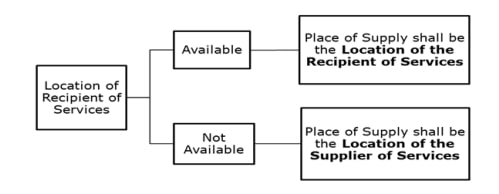
IT is clarified that the custodial services provided by banks or financial institutions to FPIs are not to be treated as services provided to “account holder”. Therefore, the Place of supply of said services will be determined under default provision i.e. sub-section 2 of section 13 of the IGST Act as under:
-
CBIC vide Circular No. 221/15/2024-GST dated 26th June, 2024 issued Clarification on Time of Supply in respect of Supply of Services of Construction of Road and Maintenance thereof of National Highway Projects of National Highways Authority of India (NHAI) in Hybrid Annuity Mode (HAM) model as under:
-
HAM is a single contract for construction as well as operation and maintenance of the highway. Such contract needs to be looked as a whole and cannot be artificially split into two separate contracts for construction and operation and maintenance.
-
In such contracts the payment is spread over the contract period in instalments and payment for each instalment is to be made after specified periods, or on completion of an event, as specified in the contract. The same appears to be covered under the “Continuous supply of services”. Thus, the time of supply for such contracts will be determined as under:
-
It is also clarified that as the instalments/annuity payable by NHAI to the concessionaire also includes some interest component, the amount of such interest shall also be included in the taxable value for the purpose of payment of tax.
-
CBIC vide Circular No. 222/16/2024-GST dated 26th June, 2024 issued Clarification on time of supply of services of spectrum usage and other similar services under GST:
-
GST is to be discharged on the supply of spectrum allocation services by the recipient of services (the telecom operator) on reverse charge basis as services are provided by government of india through DOT.
-
It is clarified that:
-
In respect of supply of spectrum allocation services, if the telecom operator chooses the option to make payments in instalments, payment for each instalment is to be made after specified periods, as specified in the Frequency Assignment Letter of DoT. Such supply is covered under the “Continuous supply of services”. Thus, the time of supply for such contracts will be determined as under:
where full upfront paymentis made by the telecom operator.
Time of supply is date of payment of full upfront amount or its due date, whichever is earlier.
where deferred payment is made by the telecom operator in specified instalments.
Time of supply is date of payment of specified instalments or its due date, whichever is earlier.
-
-
CBIC VIDE CIRCULAR NO. 223/17/2024-GST DATED 10TH JULY,2024 amended circular no. 1/1//2017 to assign following function of proper officer to Superintendent of Central Tax instead of Assistant or Deputy Commissioners of Central Tax or Assistant or Deputy Directors of Central Tax.
-
Section 25(8)-Procedure for Registration
-
Proviso to Section 27(1)- Special provisions relating to casual taxable person and non-resident taxable person
-
Section 28- Amendment of registration
-
Section 29- Cancellation/suspension] of registration
-
Section 30- Revocation of cancellation of registration
-
Rule 6- Validity of composition levy
-
Rule 9 -Verification of the application and approval
-
Rule 10- Issue of Registration Certificate
-
Rule 12- Grant of registration to persons required to deduct tax at source or to collect tax at source
-
Rule 16- Suo moto registration
-
Rule 17- Assignment of Unique Identity Number to certain special entities
-
Rule 19- Amendment of registration.
-
Rule 22- Cancellation of registration
-
Rule 23- Revocation of cancellation of registration
-
Rule 24- Migration of persons registered under the existing law
-
Rule 25- Physical verification of business premises in certain cases
-
CBIC VIDE CIRCULAR NO. 224/18/2024 GST DATE 11TH JULY,2024 issued following guidelines for recovery of outstanding dues, in cases wherein first appeal has been disposed of, till appellate tribunal comes into operation.
-
CBIC VIDE CIRCULAR NO. 225/19/2024 GST DATE 11TH JULY,2024 Clarified on various issues pertaining to taxability and valuation of supply of services of providing corporate guarantee between related persons.
-
Supply of services of providing corporate guarantee between related persons, in respect of corporate guarantee issued or renewed before 26th October 2023, the valuation of the said supply is to be done in accordance with Rule 28, as it existed during that time. However, if the corporate guarantee is issued or renewed on or after 26th October 2023, then the valuation of the said supply will be required to be done as per Rule 28(2) of CGST Rules.
-
The activity of supply of the service of providing a corporate guarantee is not linked with the actual disbursal of the loan. The service that is provided by the guarantor to the guarantee is that of taking on the risk of default. Therefore, it is clarified that the value of supply of the service of providing a corporate guarantee will be calculated based on the amount guaranteed and will not be based on the amount of loan actually disbursed to the recipient of the corporate guarantee.
-
Further, it is also clarified that the recipient of the service of providing corporate guarantee shall be eligible to avail the ITC, subject to other conditions specified in the Act and the Rules made thereunder, irrespective of when the loan is actually disbursed to the recipient, and irrespective of the amount of loan actually disbursed.
-
If the loan issued by the banking company/ financial institution is taken over by another banking company/ financial institution, the said activity of taking over of the loan does not fall under the service of providing corporate guarantee to any banking company or financial institution by a supplier to a recipient. Therefore, it is clarified that in such cases, there will be no impact on GST, unless there is issuance of fresh corporate guarantee or there is a renewal of the existing corporate guarantee. However, if the takeover of the loan is followed/ accompanied by issuance of fresh corporate guarantee, then GST would be payable on the same
-
In cases where corporate guarantee is being provided by multiple related entities, the value of such services of providing corporate guarantee shall be the sum of the actual consideration paid/ payable to co-guarantors, if the said amount of total consideration is higher than one per cent of the amount of such guarantee offered. In cases where the sum of the actual consideration is less than one per cent of the amount of such guarantee offered, then GST shall be payable by each co-guarantor proportionately on one per cent of the amount guaranteed by them.
-
For instance, if there are two co-guarantors, A and B, who jointly provide a corporate guarantee to a banking/ financial institution on behalf a related recipient C for Rs. 1 crore, then A and B shall each pay GST on 0.5% of the amount guaranteed.
-
However, if in the above case of A and B providing corporate guarantee jointly to a banking/ financial institution on behalf a related recipient C for Rs 1 crore, A provides guarantee for 60% of the guarantee amount and B provides guarantee for the remaining 40% of the guaranteed amount, then GST shall be payable by A and B proportionately i.e., 0.6% and 0.4% of the amount guaranteed. This is to say that A shall pay GST on 1% of the amount guaranteed by A, i.e., 1% on Rs. 60 lakhs and B shall pay GST on 1% of the amount guaranteed by B, i.e., 1% on Rs. 40 lakhs.
-
In cases where domestic corporates issue intra-group guarantees, GST is to be paid under forward charge mechanism, and invoice is to be issued by the supplier of the service of providing corporate guarantee to the related recipient under Section 31 of CGST Act, 2017 read along with the relevant rules.
-
However, in cases where such guarantee is provided by the foreign/ overseas entity for a related entity located in India, then GST would be payable under reverse charge mechanism, by the recipient of service, i.e., the related entity located in India.
-
It is also clarified that the value of supply of the service of providing corporate guarantee to a banking company or a financial institution on behalf of a related recipient shall be one per cent of the amount guaranteed per annum or the actual consideration, whichever is higher.
-
Accordingly, the value of supply of the service of providing corporate guarantee to a banking company or a financial institution on behalf of a related recipient for a particular number of years shall be one per cent of the amount of such guarantee offered multiplied by the number of years for which the said guarantee is offered or the actual consideration whichever is higher.
-
In cases where the corporate guarantee is provided for a period less than a year, say 6 months (half a year), then in those cases as well, the valuation may be done on proportionate basis for the said period, i.e., in this case, the value of the said supply of services may be taken as half of one per cent of the amount of such guarantee offered (6/12 * one per cent), or the actual consideration, whichever is higher.
-
However, if a corporate guarantee is issued, say for a period of one year and is renewed five times, for a period of one year each, then tax would be payable on one per cent of the amount of such guarantee offered, or the actual consideration, whichever is higher, on the issue of such corporate guarantee in the first year as well as on every renewal in subsequent years.
-
It is clarified that in cases involving the supply of service of corporate guarantees provided between related persons, where full ITC is available to the recipient of services, the value declared in the invoice shall be deemed to be the value of supply of the said service.
-
The provisions of the said sub-rule (2) of CGST Rule 28 will not apply in cases where the recipient of the services of providing corporate guarantee between related persons is located outside India.
-
CBIC VIDE CIRCULAR NO. 226/20/2024-GST DATE 11TH JULY, 2024 clarified mechanism for refund of additional IGST paid on account of upward revision in price of the goods subsequent to exports.
-
Such exporter may file an application for refund of such additional IGST paid in FORM GST RFD-01 electronically on the common portal under the category “Any other” with remarks “Refund of additional IGST paid on account of increase in price subsequent to export of goods” along with the relevant documents and such application for refunds would be processed by the jurisdictional GST officer of the concerned exporter.
-
Minimum Refund Amount: No such refund shall be paid if the amount claimed is less than one thousand rupees.
-
Time limit for filing refund: New Section 89(1B), inserted vide Notification No. 12/2024-CT dated 10.07.2024, provides that the application for refund of additional IGST paid can be filed before the expiry of two years from the relevant date as per clause (a) of Explanation (2) of section 54 of the CGST Act. However, in cases, where the relevant date as per said section was before the date on which Rule 89(1B) has come into force, such refund application can be filed before the expiry of a period of two years from the date on which the said sub-rule has come into force.
-
The circular provides the list of documents that are required to be accompanied with the refund claim in order to establish that the refund is due to such exporter.
-
The proper officer while processing such refund claim shall verify that the exporter has duly reported the details of the export invoice and the debit note in his FORM GSTR-1 and has duly paid such additional amount of IGST along with applicable interest for which refund is being sought in their FORM GSTR-3B return.
-
After the compliance the proper officer proceed to issue the refund sanction order in FORM GST RFD-06 and the payment order in FORM GST RFD-05.
-
It is further clarified that in cases of downward revision in price of goods subsequent to exports, when the exports has been made with payment of IGST. In such cases, it is clarified that the exporter is required to deposit the refund of the IGST received in proportion to the reduction in price of exported goods, along with applicable interest.
-
-
CBIC VIDE CIRCULAR NO. 227/21/2024-GST DATE 11TH JULY, 2024 has issued clarification regarding processing of refund applications filed by canteen stores department (CSD)
-
CBIC VIDE CIRCULAR NO. 228/22/2024-GST DATE 11TH JULY, 2024 clarified applicability of GST on certain cases:
-
GST exemption on the outward supplies made by Ministry of Railways (Indian Railways).(w.e.f 15th July,2024)
-
GST exemption on the transactions between Special Purpose Vehicles (SPVs) and Ministry of Railways (Indian Railways)
-
Applicability of GST on the statutory collections made by the Real Estate Regulatory Authority (RERA) in accordance with the Real Estate (Regulation and Development) Act, 2016.
-
Applicability of GST on the incentive amount shared by acquiring banks with other stakeholders in the digital payment ecosystem under the notified Incentive Scheme for promotion of RuPay Debit Cards and low value BHIM-UPI transactions.
-
GST liability on the reinsurance of specified general and life insurance schemes.
-
GST liability on the reinsurance of insurance schemes for which total premium is paid by the Government.
-
Applicability of GST on Retrocession services.
-
CIRCULAR NO. 229/23/2024-GST DATED 15TH JULY, 2024 has issued clarification regarding GST rates & classification (goods) based on the recommendations of the GST council in its 53rd meeting held on 22nd June, 2024
-
Clarification regarding GST rate on Solar Cookers:
It is hereby clarified that solar cookers that work on dual energy of solar energy and grid electricity are appropriately classifiable under heading 8516 and already attract a GST rate of 12% vide SI. No. 201A of Schedule II of notification No. 1/2017-Central Tax (Rate) dated the 28th June, 2017.
-
Clarification regarding GST rate on Fire Water Sprinklers:
It is hereby clarified that all types of sprinklers, including fire water sprinklers attract GST at the rate of 12% vide SI. No. 195 B of Schedule II of notification No. 1/2017-Central Tax (Rate) dated the 28th June, 2017.
Further, on the basis of the recommendation of the GST Council, in view of the prevailing genuine doubts, the issues for the past period are regularized on “as is where is basis”.
-
Clarification regarding GST rate on parts of Poultry-keeping machinery:
Parts of Poultry-keeping machinery are classifiable under tariff item 8436 91 00 and attract GST at the rate of 12% vide SI. No. 199 of Schedule II of notification No. 1/2017-Central Tax (Rate), dated the 28th June, 2017. On the recommendations of the Council, to bring clarity on the issue, the relevant entry at SI. No. 199 of Schedule II of notification No. 1/2017-Central Tax (Rate) dated the 28th June, 2017, has been amended vide notification No. 2/2024-Central Tax (Rate), dated the 12th July, 2024 to specifically include ‘parts’ of Poultry-keeping machinery.
-
Clarification regarding the scope of expression ‘pre-packaged and labelled’ for supply of agricultural farm produce:
On the basis of the recommendation of the GST Council, the definition of ‘pre-packaged and labelled’ in notification No. 1/2017-Central Tax (Rate) and notification No. 2/2017-Central Tax (Rate), both dated the 28th June, 2017, has been amended vide notification No. 2/2024-Central Tax (Rate) dated 12th July 2024 and notification No. 3/2024-Central Tax (Rate) dated 12th July, 2024, respectively, to exclude the supply of agricultural farm produce in package(s) of commodities containing quantity of more than 25 kilogram or 25 litre from the scope of ‘pre-packaged and labelled’. Consequently, supply of agricultural farm produce in package (s) containing quantity of more than 25 kilogram or 25 litre will not attract GST levy of 5%.
-
Clarification regarding supplies of goods made to or by agency engaged by Government
-
the concerned supplier furnishes a certificate from an officer not below the rank of the Deputy Secretary to the Government of India or the Deputy Secretary to the State Government or the Deputy Secretary in the Union Territory concerned recommending that supplies have been made to or by an agency engaged by Union Government or State Government/Union Territory for procurement and sale of such goods under any programme/scheme duly approved by the Central Government or any State Government intended to distribute such goods at free of cost or at subsidized rate to the eligible beneficiaries like economically weaker sections of the society, within a period of 180 days from the date of issuance of this Circular to the jurisdictional commissioner of the Central Tax or jurisdictional commissioner of the State Tax, or jurisdictional officer of the Union Territory Tax, as the case maybe; and
-
Input Tax Credit shall not be allowed on such inputs and, if availed on such inputs, it shall be reversed within a period of 180 days from the date of issuance of this Circular, if the supplier intends to take the benefit under the proposed regularization.
|
Appellate Forum |
Monetary Limit (amount involved in Rs.) |
|
GSTAT |
20,00,000/- |
|
High Court |
1,00,00,000/- |
|
Supreme Court |
2,00,00,000/- |
EXCLUSIONS
Monetary limits specified above for filing appeal or application by the department before GSTAT or High Court and for filing Special Leave Petition or appeal before the Supreme Court shall be applicable in all cases, except in the following circumstances where the decision to file appeal shall be taken on merits irrespective of the said monetary limits:
|
The amount of tax involved exceeds Rs. 5,00,000/-. |
Procure a certificate from the recipient of supply, issued by the Chartered Accountant (CA) or the Cost Accountant (CMA), certifying that the recipient has made the required proportionate reversal of input tax credit at his end in respect of such credit note issued by the supplier. |
|
The amount of tax does not exceed Rs. 5,00,000/-. |
Procure an undertaking/certificate from the said recipient which states that the input tax credit attributable to such discount has been reversed by him. |
It has been clarified that the amount attributable to the component of investment which is not included in the value of supply is not an exempt supply as it is neither –
Therefore, there is no requirement of reversal of ITC as per Rule 42 or rule 43 of CGST Rules, read with sub-section (1) and sub-section (2) of Section 17 of CGST Act.
|
Value of salvage/wreckage has been deducted from the claim amount. |
In such case, ownership of salvage/wreckage is not transferred to the Insurance Company. Therefore, Insurance companies are not liableto discharge GST liability on the same. |
|
Value of salvage/wreckage has not been deducted from the claim amount |
In such case, ownership of salvage/wreckage is transferred to the Insurance Company. Therefore, Insurance companies are liable to discharge GST on the said supply of salvage/wreckage to salvage buyer. |
|
Where a customer enters into an agreement of extended warranty with the supplier of the goods at the time of original supply. |
Such supply of goods along with extended warranty will constitute as composite supply and supply of goods being “principal supply”. |
|
where supply of extended warranty is made by person different from the supplier of the goods at the time of original supply. |
Supply of extended warranty shall be treated as separate supply from the original supply of goods and will be taxable as supply of services. |
|
Where a consumer enters into an agreement of extended warranty at any time after the original supply. |
Supply of extended warranty shall be treated as supply of services distinct from the original supply of goods and the same shall be treated supply of services liable for GST. |
|
Name of recipient on Tax Invoice |
Reimbursement Amount |
Input Tax Credit Available |
|
Insurance Company |
Reimburses the full value of the Invoice (entire Invoice value being approved claim cost). |
ITC shall be available to Insurance Company for full value of Tax mentioned on Invoice. |
|
Insurance Company |
Reimburses only the approved claim cost and not the full value of Invoice. |
ITC shall be available to Insurance Company to the extent of approved claimed reimbursed. |
|
Person Insured |
Reimburses full / approved claim cost. |
Input Tax Credit not available to the Insurance Company. |
|
In the transactions of extending loan or credit by an overseas affiliate to its Indian party or by the person to the related person, where no consideration has been charged other than by way of interest or discount. |
GST shall not be leviable. |
|
In the transactions of extending loan or credit by an overseas affiliate to its Indian party or by the person to the related person, where any fee in the nature of processing fee/ administrative charges/ service fee/ loan granting charges etc. is charged, over and above the amount charged by way of interest or discount. |
GST shall be leviable on such supply of services of processing/ facilitating/ administering of the loan. |
|
Invoice is issued on or before the specified date or the date of completion of the event specified in the contract. |
Time of Supply in such case should be the date of issuance of such invoice, or date of receipt of payments, whichever is earlier. |
|
Invoice is not issued on or before the specified date or the date of completion of the event specified in the contract |
Time of Supply in such case should be the date of provision of the service or date of receipt of payment, whichever is earlier. In this case, date of provision of service shall be deemed as the due date of payment as per the contract, as the invoice is required to be issued on or before the due date of payment. |
It is also clarified that the similar treatment regarding the time of supply may apply in other cases also where any natural resources are being allocated by the government to the successful bidder / purchaser for right to use the said natural resource over a period of time with the option of payments for the said services either through an upfront payment or in deferred periodic instalments over the period of time.
|
Sr. No |
Designation of the Officer |
Functions under section of the CGST Act,2017 or the rules made thereunder |
|
1. |
Assistant/Deputy Commissioners of Central Tax and Assistant/ Deputy Directors of Central Tax |
Section 10(5) - Composition levy. |
|
2. |
Superintendent of Central Tax |
|
1. In case where 1st appellate authority has confirmed the demand, as per OIO issued by adjudicating authority, partially or fully, and the taxpayers cannot file appeal against the said appellate order due to non-operation of GST Appellate Tribunal till date.
2. In order to facilitate the taxpayers to make the payment of the amount of pre-deposit as per 112(8) of CGST Act, and to avail the benefit of stay from recovery of the remaining amount of confirmed demand as per Section 112(9), It is hereby clarified that in cases where the taxpayer decides to file an appeal against the order of the appellate authority and wants to make the payment of the amount of pre-deposit as per section 112(8) of CGST Act, he can make the payment of an amount equal to the amount of pre-deposit by navigating to Services >> Ledgers>> Payment towards demand, from his dashboard.
Tax payer also need to file Declaration with the jurisdictional proper officer that he will file appeal against the said order
In case, the taxpayer does not make the payment of the amount equal to amount of pre-deposit or does not provide the undertaking/ declaration to the proper officer, then it will be presumed that taxpayer is not willing to file appeal against the order of the appellate authority and in such cases, recovery proceedings can be initiated as per the provisions of law. Similarly, when the Tribunal comes into operation, if the taxpayer does not file appeal within the timelines specified in Section 112 of the CGST Act read with CGST (Ninth Removal of Difficulties) Order, 2019 dated 03.12.2019, the remaining amount of the demand will be recovered as per the provisions of law.
It has also been noticed that some taxpayers have already paid amounts that were intended to have been paid towards a demand, through FORM GST DRC-03. Attention is invited to notification No. 12/2024- CT dated 10.07.2024, vide which sub-rule (2B) of Rule 142 and FORM GST DRC-03A has been inserted in CGST Rule, 2017, providing for a mechanism for cases where the person liable to pay tax, interest and penalty under section 52 or section 73 or section 74 or section 76 or section 122 or section 123 or section 124 or section 125 or section 127 or section 129 or section 130 of CGST Act has made payment of such tax, interest and penalty, inadvertently through FORM GST DRC-03 under Section 142(2). In such cases, the said person can file an application in FORM GST DRC-03A, electronically on the common portal, and the amount so paid and intimated through the FORM GST DRC-03 shall be adjusted as if the said payment was made towards the said demand on the date of such intimation through FORM GST DRC-03.
Accordingly, in cases where the concerned taxpayer has paid an amount that was intended to have been paid towards a particular demand through FORM GST DRC-03, has submitted an application in FORM GST DRC-03A on the common portal, the amount so paid and intimated through the FORM GST DRC-03 will be considered as if the payment was made towards the said demand on the date of such intimation through FORM GST DRC-03. The amount so paid shall also be liable to be adjusted towards the amount required to be paid as pre-deposit under Section 107 and Section 112 of the CGST Act, if and when the taxpayer files an appeal against the said demand, before the appellate authority or the appellate tribunal, as mentioned in para 4 above, and the remaining amount of confirmed demand as per the order of the adjudicating authority or the appellate authority, as the case may be, will stand stayed as per provisions of sub-section (6) of section 107 and sub-section (9) of section 112 of CGST Act. However, if the taxpayer does not file appeal within the timelines prescribed in Section 107 and Section 112 of the CGST Act, as the case may be, read with Central Goods and Services Tax (Ninth Removal of Difficulties) Order, 2019 dated 03.12.2019, the remaining amount of the demand will be recovered as per the provisions of law.
Currently, FORM GST DRC-03A, is not available. Therefore, till the time where an amount of pre-deposit has been inadvertently paid through FORM GST DRC-03 instead through Electronic Liability Ledger-II the concerned taxpayer may intimate the proper officer about the same, and the proper officer may not insist on recovery for the remaining amount, till the time FORM GST DRC-03A is made available on the portal.
The CG vide Notifications No. 06/2017-Central Tax (Rate), No. 06/2017-Integrated Tax (Rate) and No. 06/2017-Union territory Tax (Rate), all dated 28th June 2017, had specified the Canteen Stores Department (“CSD” for short), under the Ministry of Defence, as a person who shall be entitled to claim a refund of fifty per cent of the applicable central tax, integrated tax and Union territory tax paid by the CSD on all inward supplies of goods received by the CSD for the purposes of subsequent supply of such goods to their Unit Run Canteens or to their authorized customers. Further, vide Circular No. 60/34/2018-GST dated 04.09.2018, the manner and procedure for filing and processing of such refund claims was specified so as to ensure that the CSD shall apply for refund by filing an application manually to the jurisdictional tax office till the time the online utility for filing such refund claim is made available on the common portal.
In order to enable such CSD to file application for refund electronically, a new functionality has been made available on the common portal which allows CSD to apply for refund by filing an application electronically on the common portal. Further, CGST Rules, 2017 (hereinafter referred to as ‘CGST Rules’) have been amended and a new rule 95B and FORM GST RFD-10A have been inserted in CGST Rules vide Notification No. 12/2024-Central Tax dated 10.07.2024.
CBIC vide impugned circular lays down the following revised procedure for electronic submission and processing of refund application by CSD, in accordance with section 55 of CGST Act, in supersession of Circular No. 60/34/2018-GST dated 04.09.2018.
Filing of refund application:
The CSD, who wants to file an application for refund under section 55 of CGST Act, in cases where the refund is claimed of fifty per cent of the applicable central tax, integrated tax and Union territory tax paid by the said CSD on all inward supplies of goods received by it, for the purposes of subsequent supply of such goods to its Unit Run Canteens or to its authorized customers, shall file an application for refund in FORM GST RFD-10A electronically on the common portal and the same shall be processed electronically. The refund to be granted to the CSD shall be based on the invoices of the inward supplies of goods received by it for the purposes of subsequent supply of such goods to its Unit Run Canteens or to its authorized customers.
Filing of refund claim by CSD:
The CSD may apply for refund with the jurisdictional Central tax/ State tax authority to whom the CSD has been assigned. In terms of rule 95B of the CGST Rules, the CSD is required to apply for refund once in every quarter. The CSD will also be allowed to file the refund application for multiple quarters, clubbing multiple FYs, as per their option. The refund of the tax paid by the CSD shall be available only if the inward supplies of goods were received from a registered person against a tax invoice and details of such supplies have been furnished by the said registered person in his details of outward supply in FORM GSTR-1 and the said supplier has furnished his return in FORM GSTR-3B for the concerned tax period.
Relevant date for filing of refund:
The application for refund of tax can file before the expiry of two years from the last day of the quarter in which such supply was received.
As recommended by the 53rd GST Council, the GST on the services provided by Ministry of Railways (Indian Railways) to general public viz., sale of platform tickets, facility of retiring rooms, cloak room services and battery-operated car services and supply of services made between various zones/ divisions under Ministry of Railways (Indian Railways) is hereby regularized on ‘as is where is’ basis from 20.10.2023 to 14.07.2024.
As recommended by the 53rd GST Council, GST on the supply of services by SPVs to Ministry of Railways (Indian Railways) by way of allowing it to use infrastructure built and owned by them during the concession period against consideration and maintenance services supplied by Ministry of Railways (Indian Railways) to SPVs in relation to such use of infrastructure built and owned by SPVs during the concession period against consideration is hereby regularized for the period from 01.07.2017 to 14.07.2024 on ‘as is where is’ basis.
The GST Council in its 53rd meeting has also recommended to regularize the past period in respect of such transactions for the period from 01.07.2017 to 14.07.2024 on ‘as is where is’ basis.
Representation has been received requesting for clarification on whether GST is applicable on the statutory collections made by the Real Estate Regulatory Authority (RERA).
RERA is a ‘governmental authority’ as per the definition in the exemption notification No. 12/2017-CT(R) dated 28.06.2017 and is covered under the scope of entry at SI. No. 4 of notification No. 12/2017-CT(R) dated 28.06.2017.
it is hereby clarified that statutory collections made by RERA are covered under the SI. No. 4 of notification No. 12/2017-CT(R) dated 28.06.2017.
Representation has been received requesting for clarification on whether GST is applicable on the incentive amount shared by acquiring banks with other stakeholders in the digital payment ecosystem under the notified Incentive Scheme for promotion of RuPay Debit Cards and low value BHIM-UPI transactions
it is hereby clarified that further sharing of the incentive amount by the acquiring bank with other stakeholders, up to the point where the incentive is distributed in the proportion and manner as decided by NPCI in consultation with the participating banks under the notified Incentive Scheme for promotion of RuPay Debit Cards and low value BHIM-UPI transactions, is in the nature of a subsidy and is thus, not taxable.
GST liability on the services by way of reinsurance of the insurance schemes specified in SI. Nos. 35 and 36 of notification No. 12/2017-CT(R) dated 28.06.2017 is regularized for the period from 01.07.2017 to 24.01.2018 on ‘as is where is’ basis.
GST liability on the services by way of reinsurance of insurance services covered under SI. No. 40 of notification No. 12/2017-CT(R) dated 28.06.2017 is regularized for the period from 01.07.2017 to 26.07.2018 on ‘as is where is’ basis.
Representations have been received to clarify whether the term ‘reinsurance’ as mentioned in SI. No. 36A of notification No. 12/2017-CT(R) dated 28.06.2017 includes ‘retrocession’.
‘Retrocession’ means a re-insurance transaction whereby a part of assumed reinsured risk is further ceded to another Indian Insurer or a CBR (Cross Border Re-insurer).
As recommended by the GST Council, it is hereby clarified that the term ‘reinsurance’ as mentioned in SI. No. 36A of notification No. 12/2017-CT(R) dated 28.06.2017 includes ‘retrocession’ services.
8. GST liability on certain accommodation services.
Representations have been received requesting to clarify whether service by way of hostel accommodation, service apartments/hotels booked for longer period is a service of renting of residential dwelling for use as residence and exempted under entry at SI. No. 12 of notification No. 12/2017-CTR dated 28.06.2017. Requests have also been received for GST exemption on hostels for poor and middle-class students run by charitable trusts.
Vide Notification 04/2024-CT(Rata) w.e.f 15th July,2024 exempt the supply of accommodation services having value of supply less than or equal to twenty thousand rupees per person per month provided that the accommodation service is supplied for a minimum continuous period of ninety days.
GST liability on the supply of accommodation services is regularized on ‘as is where is’ basis for the period from 01.07.2017 to 14.07.2024 where value of supply of the accommodation service is less than or equal to twenty thousand rupees per person per month and the said accommodation service was supplied for a minimum continuous period of ninety days.
Prior to 17th July, 2022, supplies of pulses and cereals attracted GST at rate of 5%, wherein the said goods were put up in a unit container and bearing a registered brand name and/or bearing a brand name on which an actionable claim or enforceable right in a court of law is available.
On the basis of the recommendation of the GST Council, in view of the genuine interpretational issues, the issues for the past period from 01.07.2017 up to 17.07.2022 are hereby regularized on “as is where is” basis for supplies made to or by any agency engaged by Union Government or State Government/Union Territory for procurement and sale of such goods under any programme/scheme duly approved by the Central Government or any State Government intended to distribute such goods at free of cost or at subsidized rate to the eligible beneficiaries like economically weaker sections of the society subject to following conditions, namely:-